This is an automated email from the ASF dual-hosted git repository.

young pushed a commit to branch master
in repository https://gitbox.apache.org/repos/asf/apisix-website.git
The following commit(s) were added to refs/heads/master by this push:
new 16b172236f9 blog: add AI gateway and MCP blogs (#1926)
16b172236f9 is described below
commit 16b172236f916da969dcad54886c65d820210aa8
Author: Yilia Lin <[email protected]>
AuthorDate: Thu Jul 17 09:17:02 2025 +0800
blog: add AI gateway and MCP blogs (#1926)
* update
* remove mermaid diagram
* add links & fix
---
...ai-gateway-future-trend-of-ai-infrastructure.md | 189 +++++++++++++++++++++
.../18/mcp-monetization-navigating-ai-conomy.md.md | 148 ++++++++++++++++
2 files changed, 337 insertions(+)
diff --git
a/blog/en/blog/2025/06/18/ai-gateway-future-trend-of-ai-infrastructure.md
b/blog/en/blog/2025/06/18/ai-gateway-future-trend-of-ai-infrastructure.md
new file mode 100644
index 00000000000..2573cfea44c
--- /dev/null
+++ b/blog/en/blog/2025/06/18/ai-gateway-future-trend-of-ai-infrastructure.md
@@ -0,0 +1,189 @@
+---
+title: "AI Gateways: The Future Trend of AI Infrastructure"
+authors:
+ - name: Yilia Lin
+ title: Technical Writer
+ url: https://github.com/Yilialinn
+ image_url: https://github.com/Yilialinn.png
+keywords:
+ - API gateway
+ - AI middleware
+ - API gateway vs AI gateway
+ - AI governance
+ - AI cost control
+ - AI security
+ - APISIX AI gateway
+description: "Discover how AI gateways are revolutionizing enterprise AI
infrastructure, offering centralized control, security, cost management, and
governance for AI models and services."
+tags: [Ecosystem]
+image:
https://static.api7.ai/uploads/2025/03/07/Qs4WrU0I_apisix-ai-gateway.webp
+---
+
+## AI Infrastructure Revolution
+
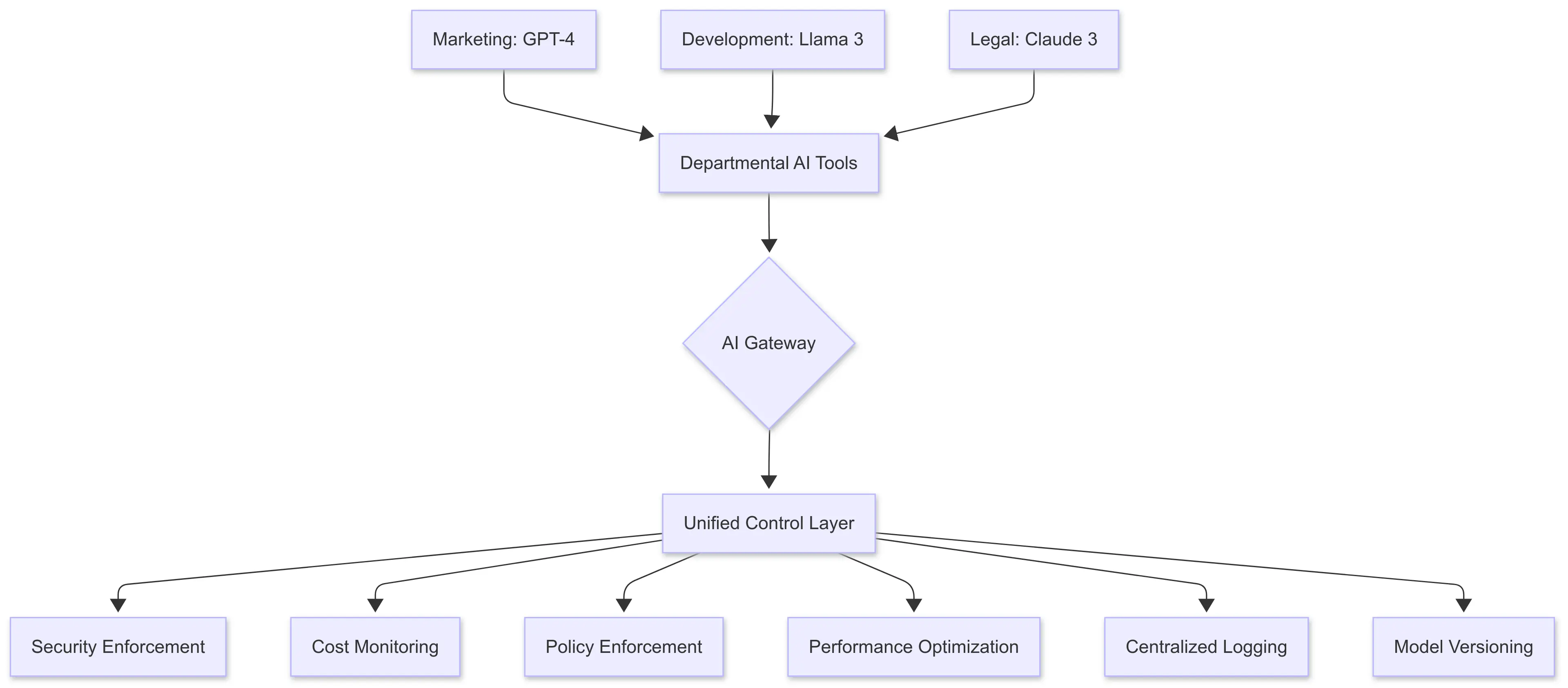
+The enterprise AI landscape has exploded into fragmented chaos. Marketing
teams deploy GPT-4 for content generation, developers fine-tune Llama 3 for
coding assistants, while legal departments rely on Claude 3 for contract
analysis. This siloed adoption creates three critical pain points:
+
+1. **Security Vulnerabilities**: 68% of enterprises report unauthorized AI
tool usage leading to PII leaks (Gartner 2025)
+2. **Cost Overruns**: Unmonitored token consumption causes 41% of companies to
exceed AI budgets by 200%+ (McKinsey)
+3. **Governance Failure**: 83% of compliance violations trace to inconsistent
AI policy enforcement (Deloitte Audit Report)
+
+Enter **AI gateways**—the middleware revolution transforming enterprise AI
from experimental tools to production-grade infrastructure. These systems
consolidate fragmented AI interactions through a unified control layer, much
like Kubernetes did for container orchestration. An AI gateway is a specialized
middleware layer that manages and secures interactions between your
applications and AI models, such as **OpenAI**'s offerings. This technology,
akin to an **API gateway**, provides visi [...]
+
+## What Is an AI Gateway
+
+An [AI
gateway](https://apisix.apache.org/blog/2025/03/06/what-is-an-ai-gateway/) is a
middleware platform designed to manage and facilitate the integration and
deployment of artificial intelligence models and services, such as OpenAI,
Anthropic, Gemini, etc. It acts as a bridge between AI models and the
applications that use them, simplifying integration and deployment, especially
for large language models. Essentially, an AI gateway serves as a crucial
control point for managing AI ser [...]
+
+
+
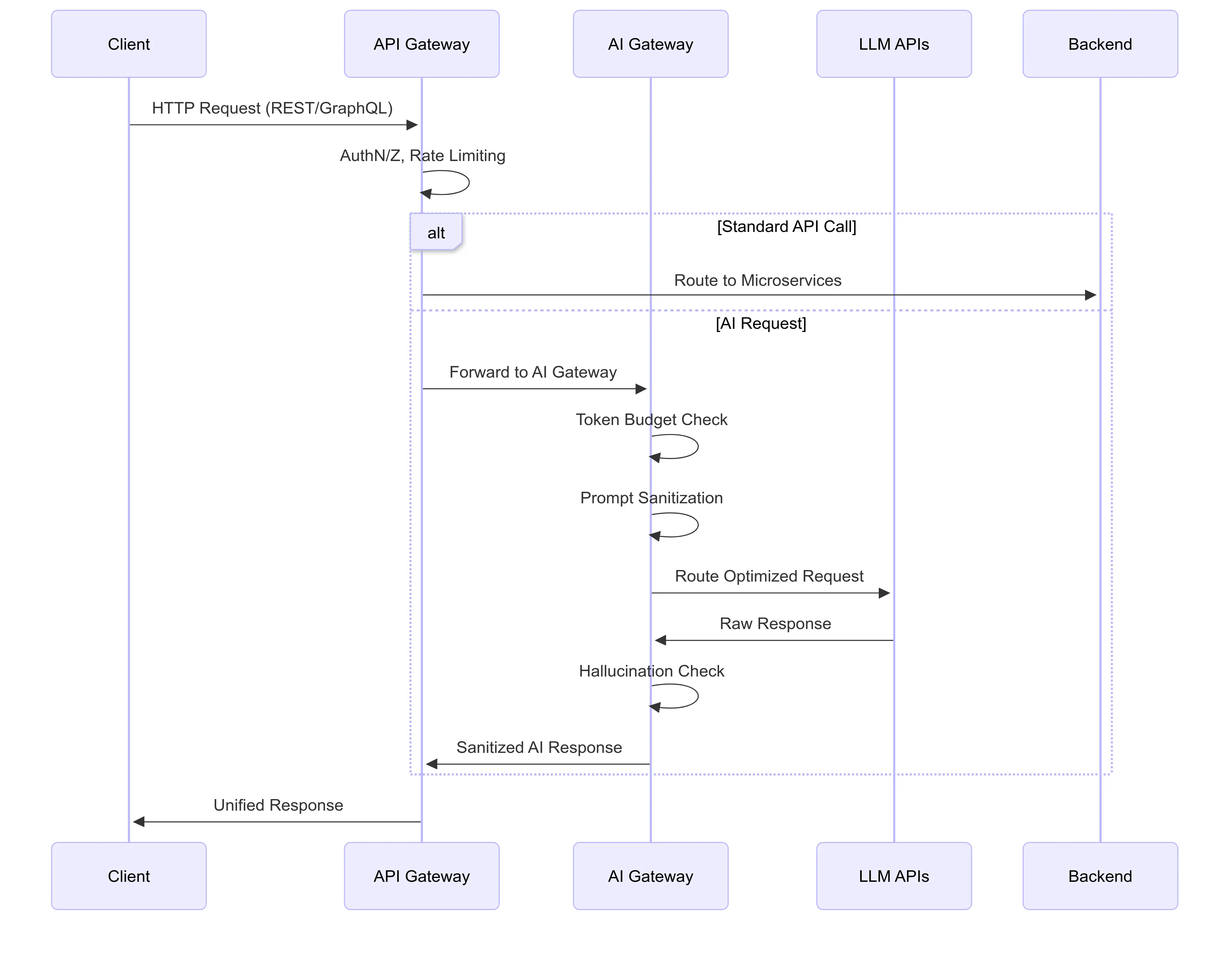
+## AI Gateway vs API Gateway: Critical Differences
+
+While [AI gateways and API
gateways](https://apisix.apache.org/blog/2025/03/21/ai-gateway-vs-api-gateway-differences-explained/)
share some infrastructure-level similarities, they differ significantly in
purpose, functionality, and optimization.
+
+| Feature | AI Gateway | API Gateway |
+|---------|------------|-------------|
+| Primary Use Case | Managing, securing, and optimizing traffic to AI/LLM
services (e.g., OpenAI, Anthropic, custom models) | Routing and securing
general-purpose REST/gRPC APIs for web, mobile, and microservices |
+| Request Characteristics | Often large payloads (e.g., prompts), streaming
input/output, expensive per-call | Lightweight, transactional HTTP/gRPC
requests |
+| Cost Awareness | Tracks tokens, usage costs, and budget limits per user/app
| Generally unaware of downstream compute or pricing costs |
+| Observability Needs | Input/output tracing, latency + token logging,
hallucination detection | Standard request logs, metrics (latency, throughput,
error rate) |
+| Security Features | PII redaction, prompt inspection, AI-specific abuse
filters | OAuth, JWT, IP allowlists, rate limiting |
+| Optimization Techniques | Caching AI responses, model fallback, prompt
standardization, and dynamic routing by cost or latency | Load balancing,
circuit breaking, and service discovery |
+| Plugin Support | AI-specific (e.g., pre-/post-processing, moderation,
reranking) | General plugins (e.g., auth, logging, CORS) |
+| Streaming Support | Critical: supports real-time token streaming from LLMs |
Optional: typically used for HTTP/2 or WebSocket |
+| Governance Controls | Usage quotas, cost controls, and team-level
restrictions for AI services | API-level access controls, usage policies per
role/team |
+| Integration Targets | LLM APIs (e.g., OpenAI, Anthropic, local models like
Llama), AI agents, RAG systems | Microservices, internal APIs, public-facing
APIs |
+
+**Summary of Key Distinctions**:
+
+- **Focus**: AI gateways specialize in **intelligent traffic management for AI
models**, while AI gateways focus on standard API traffic orchestration.
+- **Observability**: AI gateways require **fine-grained monitoring**,
including cost and token-level visibility.
+- **Security**: AI gateways offer **general web security**, whereas AI
gateways need **content-level protections** (e.g., for prompt injection).
+- **Optimization**: AI gateways can **route based on AI-specific metrics**
(e.g., model latency, accuracy, cost), unlike traditional AI gateways.
+
+
+
+## Why AI Gateways Are Essential for Enterprises?
+
+In a world where AI adoption is accelerating, AI gateways offer a **critical
layer of control, visibility, and governance**. They enable enterprises to
confidently integrate AI into their systems securely, scalably, and sustainably.
+
+**You need an AI gateway when:**
+
+- You're using LLMs or AI APIs in production (e.g., OpenAI, Claude, Gemini).
+- You want **centralized governance and cost control** over AI usage.
+- You need **security and content moderation** for AI prompts/responses.
+- You must **support multiple models** with fallback or dynamic routing.
+
+Here's a breakdown of **why AI gateways are crucial** for modern enterprises:
+
+### 1. Centralized Control for AI Services
+
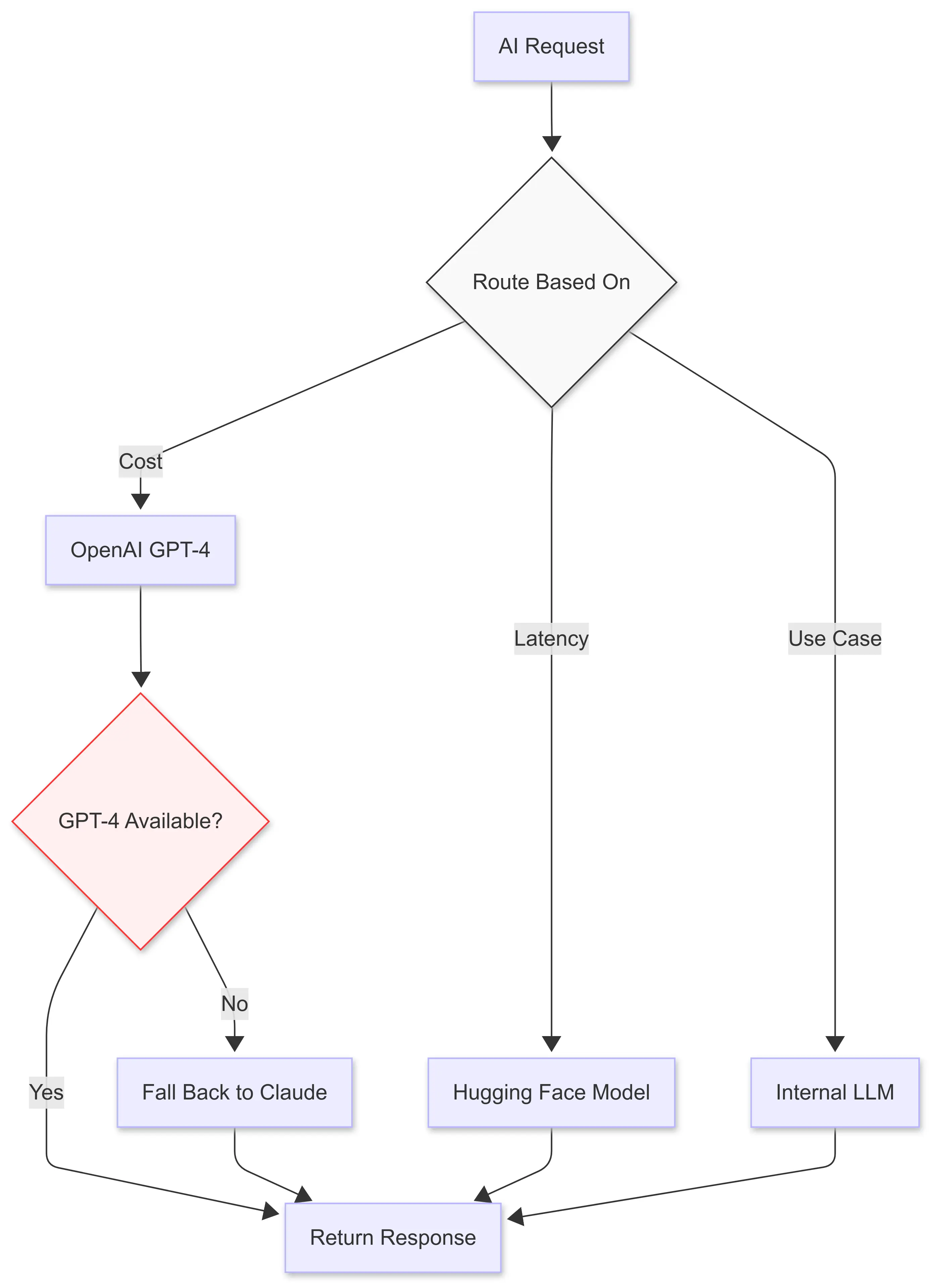
+Enterprises today adopt multiple AI models (e.g., OpenAI, Hugging Face,
internal LLMs) across cloud and on-prem environments. An AI gateway provides:
+
+- **Routing logic** based on cost, latency, or use case.
+- **Model versioning** to avoid breaking downstream systems.
+- **Fallback mechanisms** (e.g., if GPT-4 fails, fall back to Claude).
+
+
+
+### 2. Security and Compliance
+
+AI gateways serve as security enforcement layers:
+
+- **Rate limiting and quota management** to control the usage of costly LLM
APIs.
+- **Authentication & Authorization** for internal and external consumers.
+- **PII masking and data redaction** to ensure data privacy before reaching
LLMs.
+- **Audit logs** to support compliance (e.g., GDPR, SOC 2).
+
+### 3. Observability and Monitoring
+
+Visibility is critical when running generative AI workloads:
+
+- **Logging inputs/outputs and response times** for debugging.
+- **Tracing** to understand latency bottlenecks.
+- **Monitoring token usage and cost** for budget optimization.
+
+### 4. Performance Optimization
+
+AI gateways can significantly improve efficiency:
+
+- **Caching responses** to avoid redundant LLM calls.
+- **Load balancing** across multiple AI model endpoints.
+- **Streaming support** for faster UX in chat applications.
+
+### 5. Cost Control and Governance
+
+With AI APIs costing per-token or per-call, an AI gateway enables:
+
+- **Usage policies per team or app** to prevent budget overages.
+- **Token counting and cost attribution** for internal chargebacks.
+- **Auto-throttling** or alerting based on budget thresholds.
+
+### 6. Flexibility for Hybrid/Multi-Cloud AI
+
+AI workloads are often hybrid (cloud + on-prem) or multi-cloud. An AI gateway:
+
+- Supports **traffic routing across environments**.
+- Helps abstract away vendor-specific endpoints.
+- Allows **easy swapping of model providers** without rewriting client code.
+
+### 7. Plugin Ecosystem for AI Use Cases
+
+Advanced AI gateways support plugins for:
+
+- **Prompt templating and standardization**
+- **Content moderation (e.g., toxicity detection)**
+- **Custom pre- and post-processing**
+
+## Trends Shaping AI Gateways
+
+Here's a comprehensive look at the **trends shaping AI gateways** in 2025 and
beyond, driven by advancements in large language models (LLMs), multi-model
architectures, enterprise governance demands, and the need for scalable, secure
AI infrastructure.
+
+### 1. Multi-Model Routing and Federation
+
+Modern AI apps increasingly call multiple models—OpenAI for coding, Claude for
summarization, open-source LLMs for privacy.
+
+- **AI gateways are evolving to support multi-model orchestration**: routing
requests based on latency, accuracy, cost, or trust.
+- **Federated AI inference** across local, edge, and cloud-hosted models is
becoming common.
+
+### 2. Token-Aware Cost Governance
+
+Cost-first LLMOps with budget capping and per-call spend limits. LLM APIs are
priced by token, making cost tracking critical.
+
+- **AI gateways now include token accounting, quota enforcement, and cost
attribution per user/team.**
+- Enterprises want **real-time dashboards** and budget guardrails to avoid
unexpected bills.
+
+### 3. Prompt and Output Moderation Pipelines
+
+**Built-in security layers** are becoming standard for enterprise-grade LLM
access. Prompt injection, jailbreaks, and hallucinations are real risks.
+
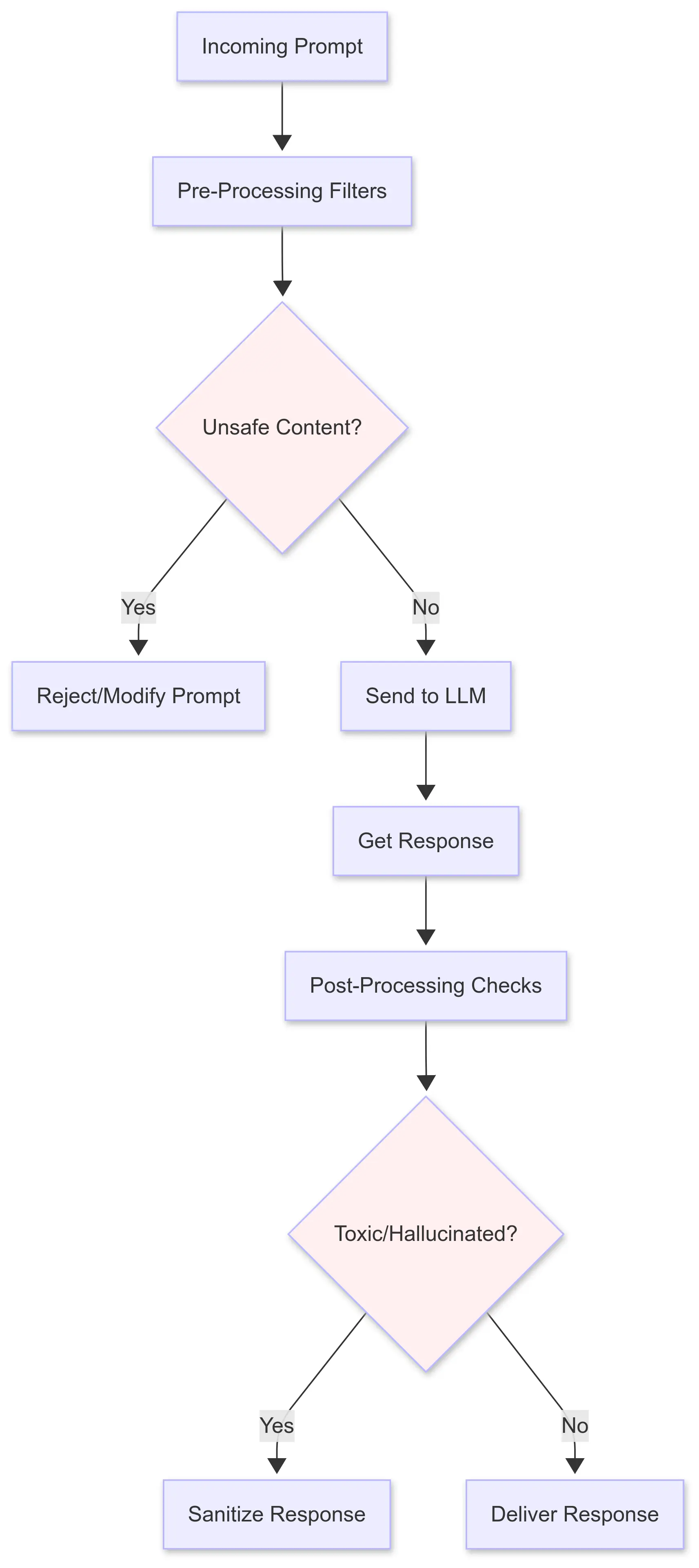
+- AI gateways increasingly support **pre-processing filters (for prompt
safety) and post-processing checks (for toxic/hallucinated content).**
+- Expect **pluggable moderation**, e.g., connecting to third-party content
filters or in-house classifiers.
+
+
+
+### 4. LLMOps Integration
+
+Gateways now help **manage deployment lifecycle, usage policies, and routing
across model updates**. AI gateways are becoming **key components of the LLMOps
stack**, sitting between orchestrators, vector stores, and foundation models.
+
+- Seamless integration with **vector databases, RAG pipelines, fine-tuning
services, and agent frameworks**.
+- **Unified config and telemetry** across dev/test/prod environments.
+
+### 5. Hybrid and Multi-Cloud AI Infrastructure
+
+A gateway becomes the **unifying control plane** in a fragmented AI ecosystem.
AI workloads are distributed across **SaaS APIs, private clusters, edge
devices, and cloud VMs**.
+
+- AI gateways act as **cross-environment brokers**, abstracting model
locations and offering **location-aware routing**.
+- They ensure **policy compliance and telemetry collection** across all
inference points.
+
+### 6. Open Standards and Ecosystem Interoperability
+
+The ecosystem is trending toward **vendor-agnostic, modular AI
infrastructure**. Avoiding lock-in is a top concern.
+
+- Movement toward **standardized APIs (e.g., OpenLLM, OpenAI-compatible
APIs)**.
+- Gateways support **pluggable backends**, open telemetry, and policy engines.
+
+## Conclusion: The Strategic Imperative
+
+AI gateways are **security enforcers, policy engines, observability hubs, and
optimization layers** for enterprise AI. As AI adoption deepens, the gateway
becomes the enterprise's trust boundary for AI. Enterprises implementing them
now gain: **risk reduction, cost control, and velocity acceleration**.
+
+As Anthropic CEO Dario Amodei notes: *"The next AI competitive advantage won't
come from larger models, but from smarter orchestration*."* Organizations
delaying adoption face irreversible technical debt, while early adopters
already attribute revenue growth to AI gateway-optimized personalization
systems.
+
+The future is clear: AI gateways are becoming the **central nervous system**
of intelligent enterprises. Those who architect this layer today will dominate
the AI-driven economy of tomorrow.
diff --git
a/blog/en/blog/2025/06/18/mcp-monetization-navigating-ai-conomy.md.md
b/blog/en/blog/2025/06/18/mcp-monetization-navigating-ai-conomy.md.md
new file mode 100644
index 00000000000..58afd891b5e
--- /dev/null
+++ b/blog/en/blog/2025/06/18/mcp-monetization-navigating-ai-conomy.md.md
@@ -0,0 +1,148 @@
+---
+title: "MCP Monetization: Navigating the AI Economy"
+authors:
+ - name: Yilia Lin
+ title: Technical Writer
+ url: https://github.com/Yilialinn
+ image_url: https://github.com/Yilialinn.png
+keywords:
+ - MCP Monetization
+ - Apache APISIX
+ - AI Economy
+ - AI Monetization Strategies
+ - API Management
+ - Model Context Protocol
+ - MCP
+description: "Discover how API gateways like Apache APISIX enable MCP
monetization, driving success in the AI economy through scalable, secure, and
efficient AI model deployment."
+tags: [Ecosystem]
+image:
https://static.api7.ai/uploads/2025/03/07/Qs4WrU0I_apisix-ai-gateway.webp
+---
+
+Artificial Intelligence (AI) has become the backbone of modern innovation,
driving advancements across industries and reshaping the global economy. At the
center of this transformation lies **MCP (Model Context Protocol)**, a
framework for contextualizing, managing, and delivering AI/ML models. MCP
enables seamless integration of AI into real-world applications, making it a
pivotal tool for monetizing AI in today's competitive landscape.
+
+In this blog, we'll dive deep into **MCP monetization** strategies, explore
the role of API gateways, and demonstrate how Apache APISIX empowers developers
to maximize their AI model's potential. By the end, you'll have actionable
insights to navigate the AI economy and unlock new revenue streams.
+
+## What Is MCP and Why Is It Important for AI Monetization?
+
+### Defining MCP
+
+MCP is a **protocol** that provides the necessary context for AI/ML models to
operate effectively in production environments. It ensures that AI models:
+
+- Understand and adapt to their deployment context (e.g., region, user
preferences).
+- Operate efficiently across diverse environments.
+- Provide reliable outputs tailored to specific use cases.
+
+In essence, MCP bridges the gap between raw AI/ML models and real-world
applications, enabling seamless scaling, deployment, and monetization.
+
+### The Role of API Gateways
+
+API gateways, such as **Apache APISIX**, serve as the critical infrastructure
for exposing AI/ML models as APIs. They:
+
+- Enable secure access to MCP-driven AI services.
+- Manage API traffic to ensure scalability and performance.
+- Provide observability and monitoring for AI/ML APIs in production.
+
+By combining MCP with an API gateway, developers can efficiently monetize
their AI models while ensuring a seamless user experience.
+
+### The Connections between API Gateways and MCP
+
+API gateways are evolving into **AI monetization control planes**, while MCP
provides the **contextual layer** that transforms static data into actionable
intelligence. Together, they enable:
+
+1. **Scalable AI Products**: Usage-based pricing aligned with token economics.
+
+2. **Ecosystem Growth**: MCP directories (e.g., Anthropic's 200+ tools) create
API marketplaces 38.
+
+3. **Enterprise Efficiency**: Companies cut AI integration costs via MCP
gateways.
+
+The future lies in hybrid architectures where APIs and MCP coexist—APIs as the
backbone of system connectivity, and MCP as the AI-native orchestrator driving
the next wave of AI economy.
+
+## The Growing AI Economy
+
+### What Is the AI Economy?
+
+The AI economy encompasses the ecosystem of technologies, applications, and
businesses built around AI/ML models.
+
+### Key Drivers of the AI Economy
+
+1. **AI Democratization**: Open-source frameworks like TensorFlow and PyTorch
lower barriers to entry.
+2. **Demand for Automation**: Industries increasingly rely on AI to automate
workflows and reduce costs.
+3. **Cloud-Native AI Services**: Platforms like AWS and Azure provide scalable
AI model deployment infrastructure.
+
+### Challenges
+
+Despite its growth, monetizing AI comes with challenges:
+
+- **High Operational Costs**: Training and deploying AI models require
significant resources.
+- **Data Privacy Concerns**: Complying with regulations like GDPR and CCPA.
+- **Scalability Issues**: Ensuring performance under varying workloads.
+
+## How API Gateways Empower MCP Monetization
+
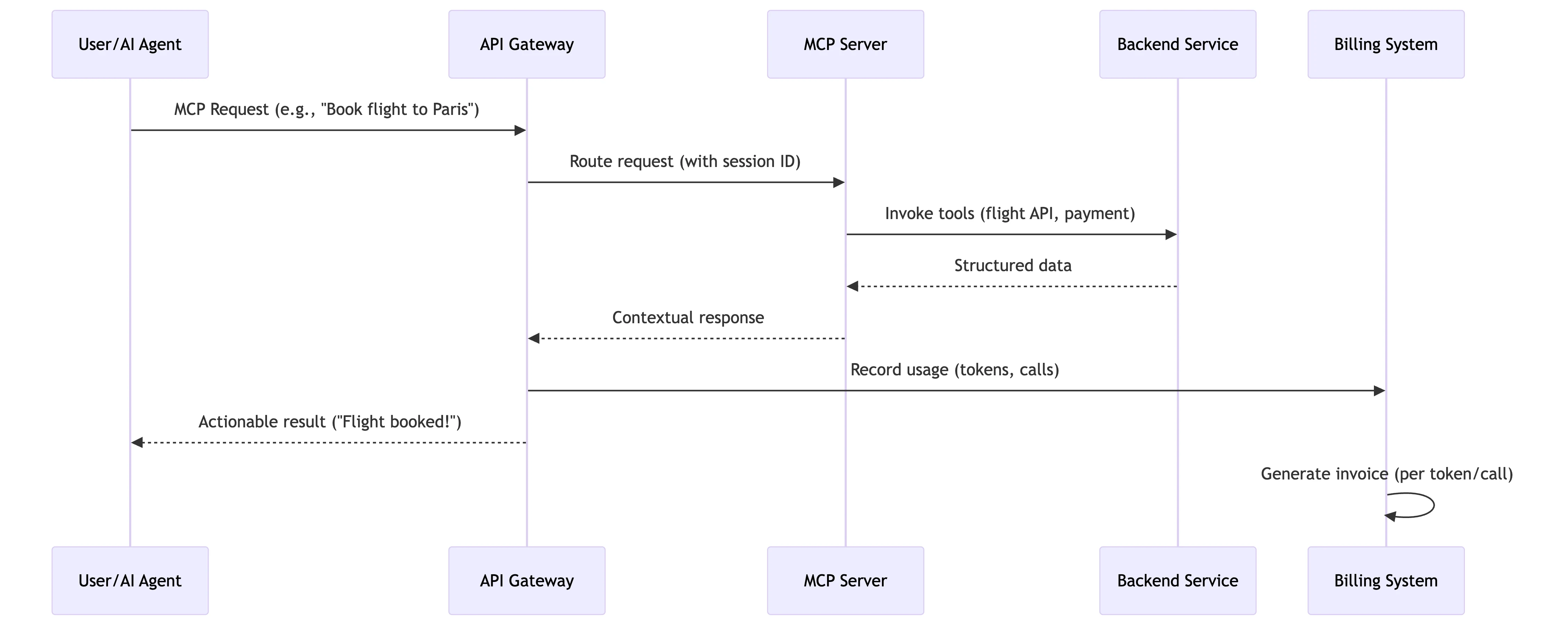
+API gateways play a pivotal role in enabling and optimizing the monetization
of MCP-driven AI models. By acting as intermediaries between AI models and
end-users, API gateways provide the infrastructure required to expose, secure,
and manage AI services efficiently. Here's how API gateways, such as **Apache
APISIX**, empower MCP monetization:
+
+
+
+### 1. Simplified API Exposure
+
+API gateways allow developers to expose AI/ML models as APIs, making them
easily consumable by applications and end-users. Without an API gateway,
managing direct connections to AI models becomes complex, especially as the
number of services scales. With Apache APISIX, developers can:
+
+- Create APIs for MCP-driven models in minutes.
+- Dynamically route requests to the appropriate model or service based on
context.
+
+By simplifying API exposure, gateways reduce time-to-market for monetized AI
models.
+
+### 2. Dynamic Context Management
+
+MCP relies on contextual information (such as geographic location, user
preferences, or application type) to deliver tailored AI results. API gateways
enhance this functionality by:
+
+- **Dynamic Routing**: Routing requests to models based on contextual metadata
(e.g., region-specific AI models or versions).
+- **Context Injection**: Enriching requests with additional information
required for MCP to process outputs effectively.
+
+This ensures the AI model delivers the most relevant and accurate results,
boosting customer satisfaction and monetization potential.
+
+### 3. Ensuring Scalability and Performance
+
+One of the most critical aspects of monetizing MCP is ensuring that APIs can
handle varying traffic loads without degrading performance. API gateways enable
scalability through:
+
+- **Load Balancing**: Distributing traffic across multiple instances of AI
models or API servers to prevent bottlenecks.
+- **Edge Computing**: Deploying AI models closer to users to minimize latency
and improve response times.
+
+For example, a sentiment analysis API experiencing a surge in traffic can
leverage Apache APISIX's dynamic load balancing to distribute requests across
different regional servers, ensuring uninterrupted performance.
+
+
+
+### 4. Security for Monetized APIs
+
+Monetizing MCP requires robust security measures to protect APIs, customer
data, and intellectual property. API gateways provide essential security
features such as:
+
+- **Authentication and Authorization**: Verifying user access through API
keys, OAuth, or JWT (JSON Web Tokens).
+- **Rate Limiting**: Preventing abuse by limiting the number of requests per
user or application.
+- **Data Encryption**: Ensuring secure communication between clients and the
API using HTTPS and TLS.
+
+These features help developers build trust with customers and comply with data
privacy regulations like GDPR and CCPA.
+
+### 5. Observability for Monetized Services
+
+To ensure the success of monetized AI/ML APIs, developers need real-time
insights into API usage and performance. API gateways provide powerful
observability tools, including:
+
+- **Traffic Analytics**: Monitoring request rates, latencies, and error rates.
+- **Custom Metrics**: Tracking key metrics such as revenue per API call or
user engagement.
+- **Logging and Debugging**: Capturing detailed logs for troubleshooting and
optimization.
+
+With these capabilities, developers can identify performance bottlenecks,
optimize resource allocation, and improve the overall user experience.
+
+### 6. Extensibility with Plugins
+
+API gateways offer a **plugin ecosystem** that enables developers to extend
functionality and automate workflows. For MCP monetization, plugins can:
+
+- Automate **model versioning** and rollbacks.
+- Integrate APIs with **payment gateways** for billing and subscription
management.
+- Enable custom workflows for specific use cases, such as pre-processing
requests or caching responses.
+
+This flexibility empowers developers to adapt their monetization strategies to
evolving business needs.
+
+## Conclusion
+
+Monetizing MCP-driven AI models is essential for thriving in today's AI
economy. By leveraging strategies like API-based monetization, marketplace
integration, and value-added services, developers can unlock significant
revenue potential.
+
+**API gateways** like Apache APISIX serves as a cornerstone for this journey,
providing the tools needed to manage, secure, and scale MCP-driven APIs
effectively. Whether you're a developer, an enterprise, or an innovator,
embracing MCP and API gateways is key to navigating the AI economy.