I was able to lab it up and confirm and recreate the bug. I realize
that this subject has been beaten to death now but I wanted to chime
in saying:
* Yes, it's definitely fixed in -current. This isn't new information
but good info for my organization.
* There's a simple way to reliable reproduce it for anyone who's curious.

Here's how to create the issue with just two devices- openbsd and any
other ospf capable device- I just used an old C2600. I took it to the
extreme and created ~500 loopback interfaces so my updates and
database would be large. The easy way to do it was:

--- start ---
#!/bin/sh
CONF=/etc/ospfd-bad.conf
echo "area 0.0.0.0 {" > $CONF
echo "interface em0 {}" >> $CONF
for S in 1 2
do

for I in `jot 254`
        do
                echo "inet 10.1$S.$I.1 255.255.255.0" > /etc/hostname.lo$S$I
                echo "interface lo$S$I { passive }" >> $CONF
        done
done
echo "}" >> $CONF

--- end ---


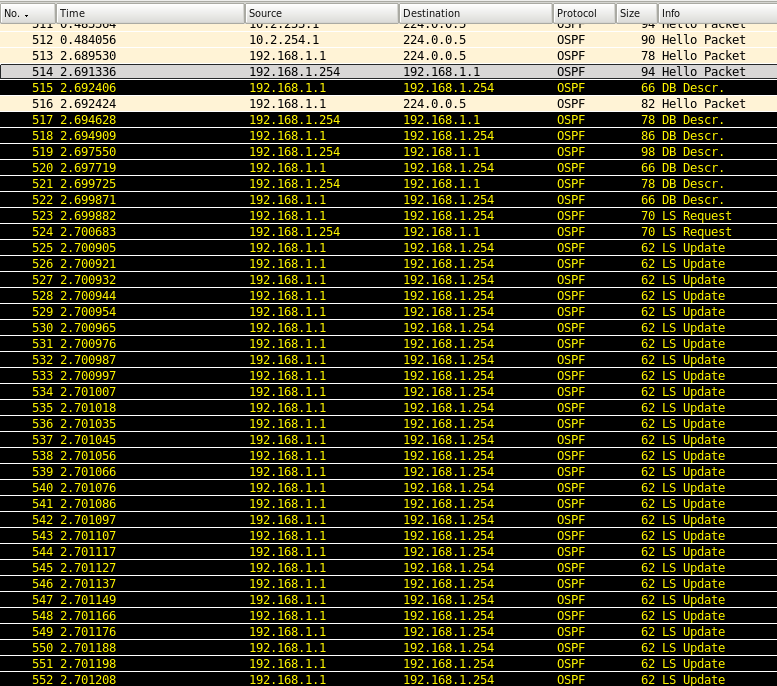
As soon as it gets an LS request from its neighbor (.254) you get the
flood from ospfd (.1):

    http://falz.net/static/openbsd/lab-ospfd-bug-screenshot.png

--Chris