Also, looks like packets detection RX side works well with HackRF, since
from the received info I was able to come to a conclusion that:
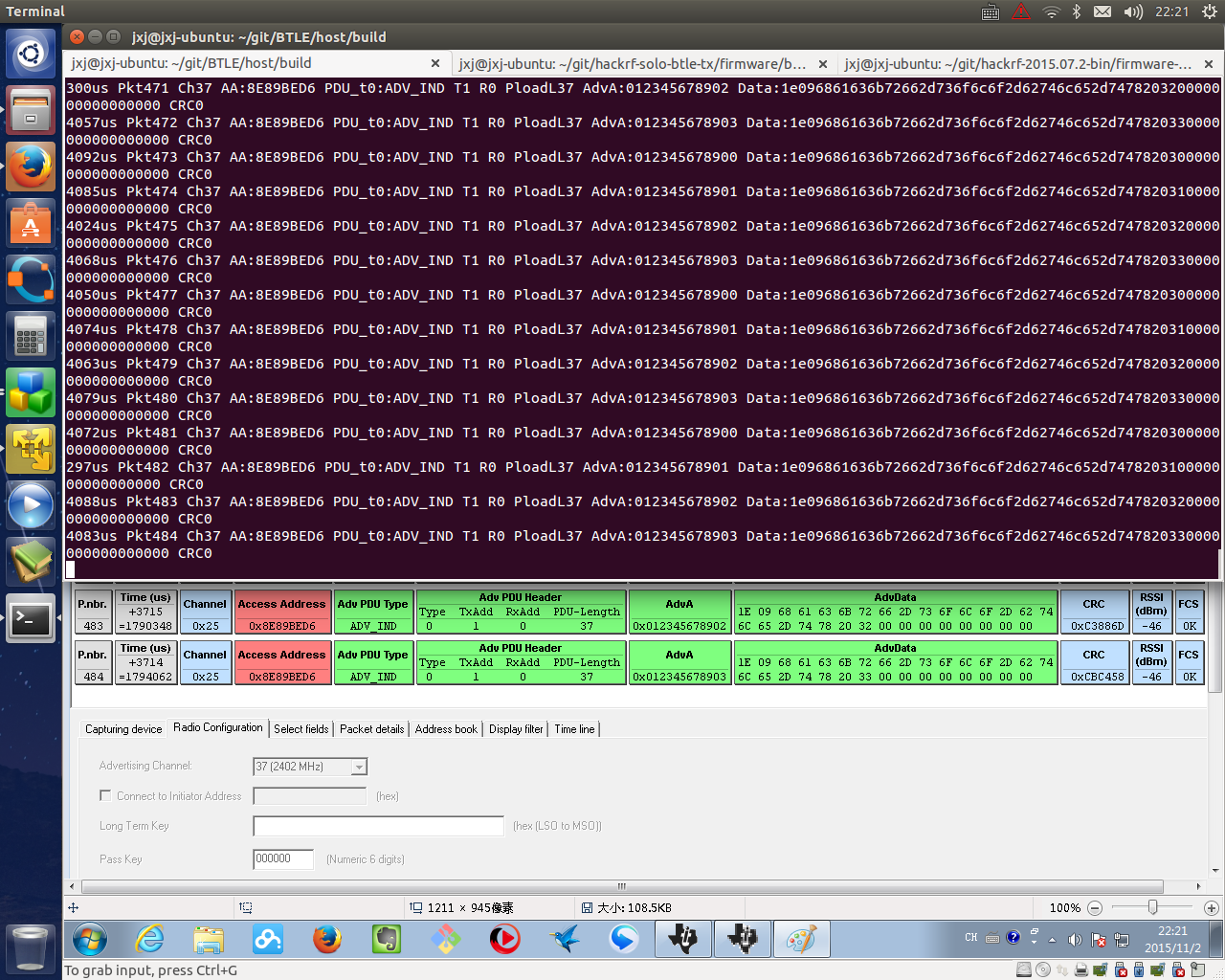
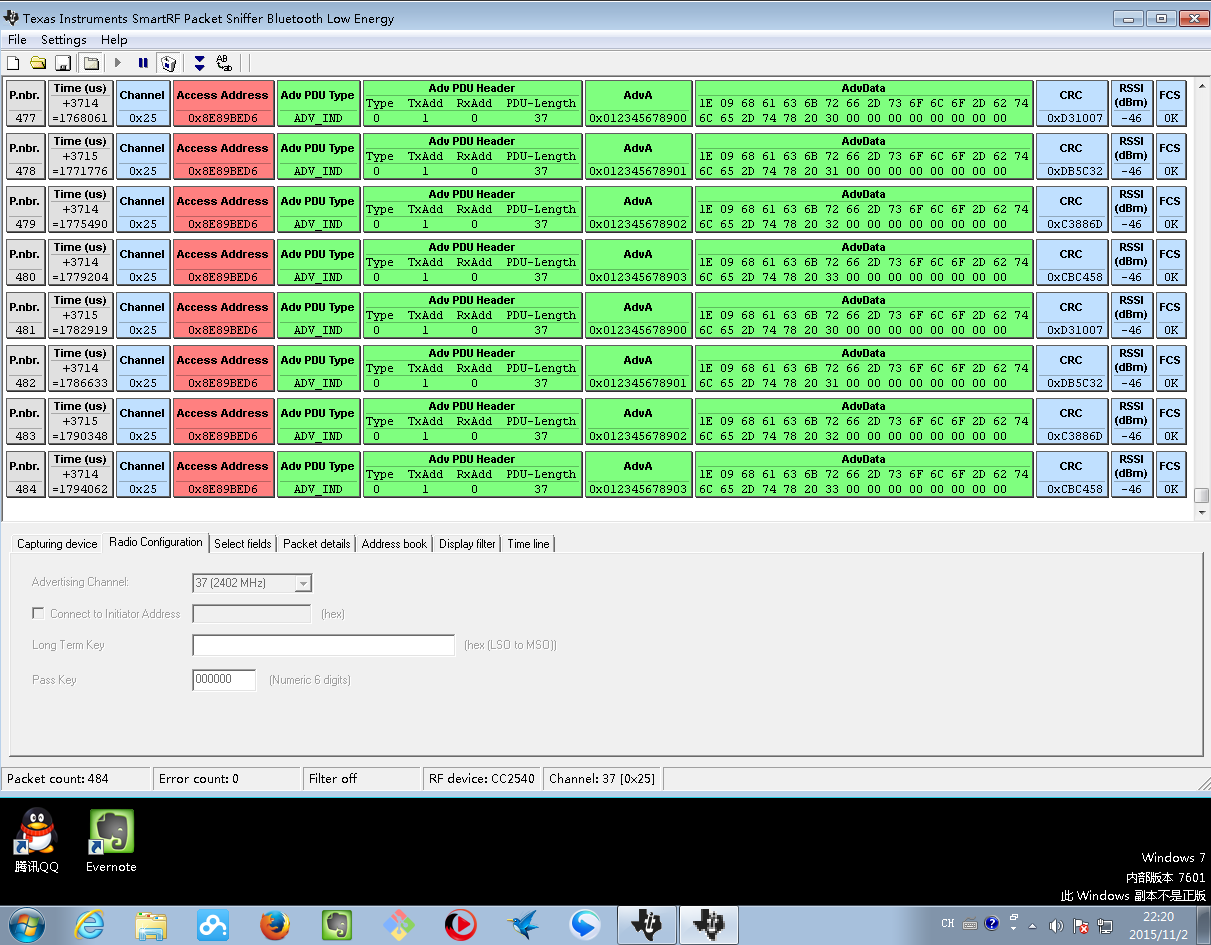
1. I need a new antenna (since I used 1GHz one), and because of that 2. Received channels are 0 3. Received 1dB. (chan 0, freq 2404MHz, access addr 00000000, crc init 00acce raw 12 verbose 1 rx 1dB ((null). So I am very positive that with the correct 2.4GHz antenna all will work even better...!!! :) On Sun, Nov 8, 2015 at 6:39 PM, Iluta V <[email protected]> wrote: > Dear Xianjun, > > Thank you very much for the great work you did! > > I already tried out your packet sniffer. Just installed it. Could you > please have a look at my output. Did I get the packet 0 and packet 1 the > right way, and did packet 2 failed or because of something else. > > Maybe you could tell why it is so, and what else I could do to improve. > Here is the output for BTLE packets: > > *packet 0* > channel_number 37 > pkt_type ADV_IND > payload_len 17 > num_info_bit 192 > after crc24 > aad6be898e00119992b1ebd7900201050702031802180418a85def > after scramble 216 0 > aad6be898e8dc3ce338c4cb1207730144f9474e0e15eedb378c3bc > num_phy_bit 216 > num_phy_sample 880 > space 1000 > INFO bit:aad6be898e00119992b1ebd7900201050702031802180418 > PHY bit:aad6be898e8dc3ce338c4cb1207730144f9474e0e15eedb378c3bc > PHY SMPL: PHY_bit_for_matlab.txt IQ_sample_for_matlab.txt IQ_sample.txt > IQ_sample_byte.txt > > *packet 1* > channel_number 37 > pkt_type CONNECT_REQ > payload_len 34 > num_info_bit 328 > after crc24 > > aad6be898e05225f96ea3018009992b1ebd7901b0a8560a77b22020f0050000000d007ffffffff1fa948da02 > after scramble 352 0 > > aad6be898e88f00837d7977eb0eca3a0a341e7e3e9c3890cabbc513cd8ea9808241b3c038e5c0b4ac187731b > num_phy_bit 352 > num_phy_sample 1424 > space 1000 > INFO > bit:aad6be898e05225f96ea3018009992b1ebd7901b0a8560a77b22020f0050000000d007ffffffff1fa9 > PHY > bit:aad6be898e88f00837d7977eb0eca3a0a341e7e3e9c3890cabbc513cd8ea9808241b3c038e5c0b4ac187731b > PHY SMPL: PHY_bit_for_matlab.txt IQ_sample_for_matlab.txt IQ_sample.txt > IQ_sample_byte.txt > > *packet 2* > channel_number 9 > pkt_type LL_DATA > get_next_field_bit: Half octet is encountered! num_hex 1 > X > Invalid packet content for specific packet type! > failed! > > Please let me know what you think! Thank you again, > > Sincerely, > > Iluta > > > On Sat, Nov 7, 2015 at 6:16 PM, Jiao Xianjun <[email protected]> wrote: > >> BTLE packet sniffer/scanner/sender. Some updates: >> http://sdr-x.github.io/BTLE-SNIFFER/ >> >> Now all BTLE channels (0~39, bothe ADV and DATA channels) are supported. >> You can use btle_tx and btle_rx to send or sniff on any BTLE channel. >> >> Raw mode are now supported on both btle_tx and btle_rx. Under this mode >> of btle_rx, after access address is detected, following raw 42 bytes >> (without descrambling, parsing) are printed out. By this way, you can do >> other experiments or communication between HACKRF boards easily. >> Have fun. >> >> >> On Wed, Nov 4, 2015 at 1:27 AM, Jiao Xianjun <[email protected]> wrote: >> >>> Hi, >>> >>> Based on my previously released BTLE packet sender, now I have done a >>> initial version of BTLE packet sniffer/scanner (Just like TI's packet >>> sniffer). See here: http://sdr-x.github.io/BTLE-SNIFFER/ >>> >>> Regarding the latency/real-time processing, I did some experiments and >>> tries, and believe that even implementation via USB (instead of on board >>> MCU), we still have chance to follow those "slow" frequency hopping link. I >>> did see many BTLE link was setup as hopping interval >15ms/20ms/30ms by >>> packet sniffer. >>> >>> Main efforts are: >>> 1. Algorithm optimization for real-time processing, such as fixed point, >>> CRC table, scrambling table, etc. >>> 2. change lib_device->transfer_count to 4 and lib_device->buffer_size to >>> 4096 in hackrf driver: hackrf.c. Original buffer size and buffer count is >>> very big so that latency is pretty big. By this modified driver, according >>> to my experiment, seems that tx and rx can be done in less than 10ms: >>> processing latency is about 3~4ms, and worst case buffer delay is around >>> 4ms. >>> >>> Snapshots of HACKRF BTLE packet sniffer VS TI's packet sniffer under >>> fastest flow of continuous/non-gap BTLE packets sequence to demonstrate >>> full real-time processing ability. They capture the same amount of packets >>> and contents: >>> >>> http://sdr-x.github.io/media/mine-btle-sniffer2.png >>> http://sdr-x.github.io/media/TI3.png >>> >>> youtube: https://youtu.be/9LDPhOF2yyw >>> >>> Besides, >>> A new packet type "Discovery" is added, which can display any names and >>> services via btle_tx to your App like LightBlue. ( I use this packet type >>> in the "ADS-B BTLE Air Relay" http://sdr-x.github.io/abar/ to display >>> flight information) >>> >>> >>> On Fri, Aug 22, 2014 at 9:07 PM, Michael Ossmann <[email protected]> >>> wrote: >>> >>>> I agree that some code on the ARM would be required. Additionally, >>>> there are probably ways to improve the tuning and rx/tx switch timing >>>> even from the ARM. We haven't done much to optimize those things. >>>> There may be a lot of time that could be saved by speeding up SPI or I2C >>>> communication or by eliminating unnecessary commands being issued by the >>>> ARM to the other chips. It may even be possible to parallelize some >>>> things that are now done in sequence. >>>> >>>> Overall, I'm pretty sure that the timing required for LE operation is >>>> achievable, but I'm not sure how close our current code is to being fast >>>> enough. >>>> >>>> Mike >>>> >>>> >>>> On Wed, Aug 06, 2014 at 09:55:13AM +0800, Jiao Xianjun wrote: >>>> > >>>> > Hi Ryan, >>>> > >>>> > Thanks a lot for your offering the information. You are mastery on >>>> BTLE >>>> > protocol! I should learn more. >>>> > 150us seems too fast for computer, and should consider on-board >>>> processing. >>>> > >>>> > BR >>>> > >>>> > Jiao Xianjun >>>> > >>>> > >>>> > On Wed, Aug 6, 2014 at 9:46 AM, Mike Ryan <[email protected]> >>>> wrote: >>>> > >>>> > > It is possible to hop at such a low rate, but the timing of the >>>> > > beginning of each connection event (where the master and slave >>>> transmit >>>> > > on each channel) has to be very precise. Additionally, a master and >>>> > > slave must have a TX-to-RX and RX-to-TX turnaround time of 150 +/- >>>> 2 us. >>>> > > >>>> > > In other words, after a master transmits, it must be able to >>>> receive the >>>> > > slave's reply within 150 us. A slave must be able to switch from >>>> > > receiving the master's packet to transmitting its reply within 150 >>>> us. >>>> > > >>>> > > On Wed, Aug 06, 2014 at 09:30:19AM +0800, Jiao Xianjun wrote: >>>> > > > You are correct on that USB latency. I did a quick experiment >>>> just now to >>>> > > > test fastest switching speed of my BTLE packet sender via hackrf >>>> (Set >>>> > > Space >>>> > > > field to 1, means that I want it be 1ms). It is around 60ms. (See >>>> the >>>> > > > snapshot attached, time stamp of the last three packets). >>>> > > > >>>> > > > 60ms maybe not so bad for real BTLE frequency hopping? I just do >>>> a quick >>>> > > > search for this to verify that (see attached two .pdf, and search >>>> hopping >>>> > > > in them). Seems that hopping speed requirement is not so high, >>>> and 60ms >>>> > > is >>>> > > > OK. Just paste some related words here: >>>> > > > >>>> > > > "For a new connection event, master and slave use a new data >>>> channel >>>> > > > frequency, which is computed >>>> > > > by using the frequency hopping algorithm. The time between the >>>> start of >>>> > > two >>>> > > > consecutive connection >>>> > > > events is specified by the connInterval parameter, which is a >>>> multiple of >>>> > > > 1.25 ms in the range between >>>> > > > 7.5 ms and 4 s. Another important parameter is connSlaveLatency, >>>> which >>>> > > > defines the number of >>>> > > > consecutive connection events during which the slave is not >>>> required to >>>> > > > listen to the master and thus >>>> > > > can keep the radio turned off. This parameter is an integer >>>> between 0 and >>>> > > > 499 and should not cause a >>>> > > > supervision timeout. A supervision timeout happens when the time >>>> since >>>> > > the >>>> > > > last received packet >>>> > > > exceeds the connSupervisionTimeout parameter, which is in the >>>> range >>>> > > between >>>> > > > 100 ms and 32 s. The >>>> > > > purpose of this mechanism is to detect the loss of a connection >>>> due to >>>> > > > severe interference or the >>>> > > > movement of a device outside the range of its peer. >>>> > > > " >>>> > > > >>>> > > > "The frequency retention time in the frequency hopping method >>>> shall be >>>> > > 0.4 >>>> > > > second or less. For >>>> > > > the radio equipment that uses the frequency hopping method >>>> excluding a >>>> > > > combination of the >>>> > > > spread spectrum method and OFDM, the total sum of the frequency >>>> retention >>>> > > > time in any frequency >>>> > > > within the time obtained by multiplying the diffusion rate by 0.4 >>>> second >>>> > > > shall be 0.4 second or >>>> > > > shorter. >>>> > > > " >>>> > > > >>>> > > > >>>> > > > >>>> > > > >>>> > > > >>>> > > > >>>> > > > >>>> > > > >>>> > > > On Wed, Aug 6, 2014 at 8:54 AM, Mike Ryan < >>>> [email protected]> >>>> > > wrote: >>>> > > > >>>> > > > > I suspect the radio hardware is capable of retuning very >>>> quickly, but >>>> > > > > the USB latency is too high for real-time channel hopping. It >>>> would be >>>> > > > > necessary to enqueue packets on the HackRF and have the ARM MCU >>>> control >>>> > > > > the timing of channel hops. >>>> > > > > >>>> > > > > I didn't mean to sound too negative. Your development is very >>>> > > > > interesting, and I definitely think it could be used as the >>>> basis of a >>>> > > > > more robust BLE device emulator. >>>> > > > > >>>> > > > > On Wed, Aug 06, 2014 at 08:50:09AM +0800, Jiao Xianjun wrote: >>>> > > > > > Exactly. >>>> > > > > > >>>> > > > > > What I do is just offering a tool. Those example is just a >>>> simple >>>> > > > > > verification. >>>> > > > > > >>>> > > > > > I think the tool and hackrf do have the full ability, because >>>> hackrf >>>> > > can >>>> > > > > > switch from channel to channel very quickly (less than >>>> several us? >>>> > > Maybe >>>> > > > > > Ossmann can give some number?). >>>> > > > > > >>>> > > > > > You may define a packet sequence with each packet starting >>>> with >>>> > > different >>>> > > > > > channel number as you want, then hackrf will transmit a >>>> hopping >>>> > > channel >>>> > > > > > packet sequence. >>>> > > > > > >>>> > > > > > >>>> > > > > > >>>> > > > > > On Wed, Aug 6, 2014 at 12:02 AM, Mike Ryan < >>>> [email protected]> >>>> > > > > wrote: >>>> > > > > > >>>> > > > > > > Crackle will crack the pairing that is found in *any* PCAP >>>> file, it >>>> > > > > just >>>> > > > > > > so happens that Ubertooth is the best tools for producing >>>> these. >>>> > > > > > > >>>> > > > > > > The sample packets provided by Jiao Xianjun do not include a >>>> > > pairing >>>> > > > > > > sequence, just the encryption start sequence. Lacking the >>>> pairing, >>>> > > > > > > Crackle can't do anything here. >>>> > > > > > > >>>> > > > > > > Also, the sample packets are not part of a legal BLE >>>> connection. >>>> > > The >>>> > > > > > > HackRF sits on a single channel (physical channel 9) and >>>> sends them >>>> > > > > out. >>>> > > > > > > A real BLE connection hops among the data channels as it >>>> transmits, >>>> > > > > only >>>> > > > > > > sending a single packet per channel. >>>> > > > > > > >>>> > > > > > > On Tue, Aug 05, 2014 at 08:26:10AM -0400, Luke Berndt wrote: >>>> > > > > > > > Nicely done! Does anyone know if it would be possible to >>>> get >>>> > > CrackLE >>>> > > > > > > running against this? It was designed for UberTooth so I am >>>> not >>>> > > sure >>>> > > > > if it >>>> > > > > > > needs some HW. >>>> > > > > > > > https://github.com/mikeryan/crackle/ >>>> > > > > > > > >>>> > > > > > > > >>>> > > > > > > > >>>> > > > > > > > Sent from my iPhone >>>> > > > > > > > >>>> > > > > > > > > On Aug 5, 2014, at 2:15 AM, Jiao Xianjun < >>>> [email protected]> >>>> > > > > wrote: >>>> > > > > > > > > >>>> > > > > > > > > A BTLE (Bluetooth Low energy)/BT4.0 radio packet sender >>>> ( build >>>> > > > > based >>>> > > > > > > on hackrf_transfer: https://github.com/mossmann/hackrf ) >>>> > > > > > > > > >>>> > > > > > > > > See project here: https://github.com/JiaoXianjun/ >>>> repo BTLE >>>> > > > > > > > > >>>> > > > > > > > > All link layer packet formats are supported. (Chapter >>>> 2&3, >>>> > > PartB, >>>> > > > > > > Volume 6, Core_V4.0.pdf : >>>> > > > > > > >>>> > > > > >>>> > > >>>> https://www.google.fi/url?sa=t&rct=j&q=&esrc=s&source=web&cd=1&cad=rja&uact=8&ved=0CCAQFjAA&url=https%3A%2F%2Fwww.bluetooth.org%2Fdocman%2Fhandlers%2Fdownloaddoc.ashx%3Fdoc_id%3D229737&ei=ui3gU4GkC-up0AW4q4GwBw&usg=AFQjCNFY1IFeFAAWwimnoaWMsIRZQvPDSw&sig2=wTgMMxNPJ52NHclpsQ4XhQ&bvm=bv.72197243,d.d2k >>>> > > > > > > ) >>>> > > > > > > > > >>>> > > > > > > > > It can be used to transmit arbitrary pre-defined BTLE >>>> > > signal/packet >>>> > > > > > > sequence, such as raw bits to GFSK modulator, iBeacon >>>> packet, >>>> > > > > Connection >>>> > > > > > > establishment procedure packet in TI's website: >>>> > > > > > > http://processors.wiki.ti.com/index.php/BLE_sniffer_guide >>>> , or any >>>> > > > > other >>>> > > > > > > packets you want. Together with TI's packet sniffer, you >>>> will have >>>> > > > > full TX >>>> > > > > > > and RX abilities. See video demo 1 >>>> http://youtu.be/Y8ttV5AEb-g >>>> > > > > (outside >>>> > > > > > > China) or video demo 2 >>>> > > http://v.youku.com/v_show/id_XNzUxMDIzNzAw.html >>>> > > > > > > (inside China) >>>> > > > > > > > > >>>> > > > > > > > > ----Build: >>>> > > > > > > > > >>>> > > > > > > > > cd host >>>> > > > > > > > > mkdir build >>>> > > > > > > > > cd build >>>> > > > > > > > > cmake ../ >>>> > > > > > > > > make >>>> > > > > > > > > sudo make install (or not install, just use >>>> btle_tx in >>>> > > > > > > hackrf-tools/src) >>>> > > > > > > > > >>>> > > > > > > > > ----Usage method 1: >>>> > > > > > > > > >>>> > > > > > > > > btle_tx packet1 packet2 ... packetX ... rN >>>> > > > > > > > > >>>> > > > > > > > > ----Usage method 2: >>>> > > > > > > > > >>>> > > > > > > > > btle_tx packets.txt >>>> > > > > > > > > >>>> > > > > > > > > In method 2, just those command line parameters >>>> (packet1 ... >>>> > > rN) in >>>> > > > > > > method 1 are written/grouped in a .txt file as input of >>>> btle_tx >>>> > > tool. >>>> > > > > One >>>> > > > > > > parameter one line. A line start with "#" is regarded as >>>> comment. >>>> > > See >>>> > > > > > > packets.txt example in hackrf-tools/src. >>>> > > > > > > > > >>>> > > > > > > > > "packetX" is one string which describes one packet. All >>>> packets >>>> > > > > > > compose a packets sequence. >>>> > > > > > > > > >>>> > > > > > > > > "rN" means the sequence will be repeated for N times. >>>> If it is >>>> > > not >>>> > > > > > > specified, the sequence will only be sent once. >>>> > > > > > > > > >>>> > > > > > > > > ----Format of packet descriptor "packetX" >>>> > > > > > > > > >>>> > > > > > > > > >>>> > > > > >>>> channel_number-packet_type-field-value-field-value-...-Space-value >>>> > > > > > > > > >>>> > > > > > > > > Each descriptor string starts with BTLE channel number >>>> (0~39), >>>> > > then >>>> > > > > > > followed by packet_type >>>> (RAW/iBeacon/ADV_IND/ADV_DIRECT_IND/etc. >>>> > > See >>>> > > > > all >>>> > > > > > > format examples at the end), then followed by field-value >>>> pair >>>> > > which is >>>> > > > > > > packet_type specific, at last there is Space-value pair >>>> (optional) >>>> > > > > where >>>> > > > > > > the value specifies how many millisecond will be waited >>>> after this >>>> > > > > packet >>>> > > > > > > sent. >>>> > > > > > > > > >>>> > > > > > > > > ----iBeacon example: (iBeacon principle: >>>> > > > > > > http://www.warski.org/blog/2014/01/how-ibeacons-work/ ) >>>> > > > > > > > > >>>> > > > > > > > > ./btle_tx >>>> > > > > > > >>>> > > > > >>>> > > >>>> 37-iBeacon-AdvA-010203040506-UUID-B9407F30F5F8466EAFF925556B57FE6D-Major-0008-Minor-0009-TxPower-C5-Space-100 >>>> > > > > > > r100 >>>> > > > > > > > > >>>> > > > > > > > > Above command sends iBeacon packet and repeats it 100 >>>> times >>>> > > with >>>> > > > > 100ms >>>> > > > > > > time space (If you have "Locate" app in your iPhone/iPad, >>>> it will >>>> > > > > detect >>>> > > > > > > the packet and show the iBeacon info.). The packet >>>> descriptor >>>> > > string: >>>> > > > > > > > > >>>> > > > > > > > > >>>> > > > > > > >>>> > > > > >>>> > > >>>> 37-iBeacon-AdvA-010203040506-UUID-B9407F30F5F8466EAFF925556B57FE6D-Major-0008-Minor-0009-TxPower-C5-Space-100 >>>> > > > > > > > > >>>> > > > > > > > > 37 -- channel 37 (one of BTLE Advertising channel 37 38 >>>> 39) >>>> > > > > > > > > >>>> > > > > > > > > iBeacon -- packet format key word which means iBeacon >>>> format. >>>> > > > > > > (Actually it is ADV_IND format in Core_V4.0.pdf) >>>> > > > > > > > > >>>> > > > > > > > > AdvA -- Advertising address (MAC address) which is set >>>> as >>>> > > > > 010203040506 >>>> > > > > > > (See Core_V4.0.pdf) >>>> > > > > > > > > >>>> > > > > > > > > UUID -- here we specify it as Estimote’s fixed UUID: >>>> > > > > > > B9407F30F5F8466EAFF925556B57FE6D >>>> > > > > > > > > >>>> > > > > > > > > Major -- major number of iBeacon format. (Here it is >>>> 0008) >>>> > > > > > > > > >>>> > > > > > > > > Minor -- minor number of iBeacon format. (Here it is >>>> 0009) >>>> > > > > > > > > >>>> > > > > > > > > Txpower -- transmit power parameter of iBeacon format >>>> (Here it >>>> > > is >>>> > > > > C5) >>>> > > > > > > > > >>>> > > > > > > > > Space -- How many millisecond will be waited after this >>>> packet >>>> > > > > sent. >>>> > > > > > > (Here it is 100ms) >>>> > > > > > > > > >>>> > > > > > > > > ----Connection establishment example: (See "Connection >>>> > > > > establishment" >>>> > > > > > > part of >>>> http://processors.wiki.ti.com/index.php/BLE_sniffer_guide >>>> > > ) >>>> > > > > > > > > >>>> > > > > > > > > ./btle_tx >>>> > > > > > > >>>> > > > > >>>> > > >>>> 37-ADV_IND-TxAdd-0-RxAdd-0-AdvA-90D7EBB19299-AdvData-0201050702031802180418-Space-1000 >>>> > > > > > > >>>> > > > > > > >>>> > > > > >>>> > > >>>> 37-CONNECT_REQ-TxAdd-0-RxAdd-0-InitA-001830EA965F-AdvA-90D7EBB19299-AA-60850A1B-CRCInit-A77B22-WinSize-02-WinOffset-000F-Interval-0050-Latency-0000-Timeout-07D0-ChM-1FFFFFFFFF-Hop-9-SCA-5-Space-1000 >>>> > > > > > > >>>> > > > > > > >>>> > > > > >>>> > > >>>> 9-LL_DATA-AA-60850A1B-LLID-1-NESN-0-SN-0-MD-0-DATA-X-CRCInit-A77B22-Space-1000 >>>> > > > > > > > > >>>> > > > > > > > > Above simualtes a Connection establishment procedure >>>> between >>>> > > > > device 1 >>>> > > > > > > and device 2. >>>> > > > > > > > > >>>> > > > > > > > > The 1st packet -- device 1 sends ADV_IND packet in >>>> channel 37. >>>> > > > > > > > > >>>> > > > > > > > > The 2nd packet -- After device 2 (in scanning state) >>>> receives >>>> > > the >>>> > > > > ADV >>>> > > > > > > packet from device 1, device 2 sends CONNECT_REQ packet to >>>> request >>>> > > > > > > connection setup with device 1. In this request packet, >>>> there are >>>> > > > > device 2 >>>> > > > > > > MAC address (InitA), target MAC address (device 1 MAC >>>> address >>>> > > AdvA), >>>> > > > > Access >>>> > > > > > > address (AA) which will be used by device 1 in following >>>> packet >>>> > > > > sending in >>>> > > > > > > data channel, CRC initilization value for following device 1 >>>> > > sending >>>> > > > > > > packet, Hopping channel information (ChM and Hop) for data >>>> channel >>>> > > > > used by >>>> > > > > > > device 1, etc. >>>> > > > > > > > > >>>> > > > > > > > > The 3rd packet -- device 1 send an empty Link layer >>>> data PDU in >>>> > > > > > > channel 9 (decided by hopping scheme) according to those >>>> connection >>>> > > > > request >>>> > > > > > > information received from device 2. (One "X" after field >>>> "DATA" >>>> > > means >>>> > > > > there >>>> > > > > > > is no data for this field ) >>>> > > > > > > > > >>>> > > > > > > > > Time space between packets are 1s (1000ms). Tune TI's >>>> packet >>>> > > > > sniffer >>>> > > > > > > to channel 37, then above establishment procedure will be >>>> captured. >>>> > > > > > > > > >>>> > > > > > > > > ----Packet descriptor examples for all formats: >>>> > > > > > > > > >>>> > > > > > > > > RAW packets: (All bits will be sent to GFSK modulator >>>> directly) >>>> > > > > > > > > >>>> > > > > > > > > >>>> > > > > > > >>>> > > > > >>>> > > >>>> 13-RAW-AAD6BE898E5F134B5D86F2999CC3D7DF5EDF15DEE39AA2E5D0728EB68B0E449B07C547B80EAA8DD257A0E5EACB0B >>>> > > > > > > > > >>>> > > > > > > > > ADVERTISING CHANNEL packets: >>>> > > > > > > > > >>>> > > > > > > > > >>>> > > > > > > >>>> > > > > >>>> > > >>>> 37-IBEACON-AdvA-010203040506-UUID-B9407F30F5F8466EAFF925556B57FE6D-Major-0008-Minor-0009-TxPower-C5 >>>> > > > > > > > > >>>> > > > > > > >>>> > > > > >>>> > > >>>> 37-ADV_IND-TxAdd-1-RxAdd-0-AdvA-010203040506-AdvData-00112233445566778899AABBCCDDEEFF >>>> > > > > > > > > >>>> > > > > > > >>>> > > >>>> 37-ADV_DIRECT_IND-TxAdd-1-RxAdd-0-AdvA-010203040506-InitA-0708090A0B0C >>>> > > > > > > > > >>>> > > > > > > >>>> > > > > >>>> > > >>>> 37-ADV_NONCONN_IND-TxAdd-1-RxAdd-0-AdvA-010203040506-AdvData-00112233445566778899AABBCCDDEEFF >>>> > > > > > > > > >>>> > > > > > > >>>> > > > > >>>> > > >>>> 37-ADV_SCAN_IND-TxAdd-1-RxAdd-0-AdvA-010203040506-AdvData-00112233445566778899AABBCCDDEEFF >>>> > > > > > > > > >>>> > > > > 37-SCAN_REQ-TxAdd-1-RxAdd-0-ScanA-010203040506-AdvA-0708090A0B0C >>>> > > > > > > > > >>>> > > > > > > >>>> > > > > >>>> > > >>>> 37-SCAN_RSP-TxAdd-1-RxAdd-0-AdvA-010203040506-ScanRspData-00112233445566778899AABBCCDDEEFF >>>> > > > > > > > > >>>> > > > > > > >>>> > > > > >>>> > > >>>> 37-CONNECT_REQ-TxAdd-1-RxAdd-0-InitA-010203040506-AdvA-0708090A0B0C-AA-01020304-CRCInit-050607-WinSize-08-WinOffset-090A-Interval-0B0C-Latency-0D0E-Timeout-0F00-ChM-0102030405-Hop-3-SCA-4 >>>> > > > > > > > > >>>> > > > > > > > > DATA CHANNEL packets: >>>> > > > > > > > > >>>> > > > > > > > > >>>> > > > > >>>> 9-LL_DATA-AA-60850A1B-LLID-1-NESN-0-SN-0-MD-0-DATA-X-CRCInit-A77B22 >>>> > > > > > > > > >>>> > > > > > > >>>> > > > > >>>> > > >>>> 9-LL_CONNECTION_UPDATE_REQ-AA-60850A1B-LLID-1-NESN-0-SN-0-MD-0-WinSize-02-WinOffset-000F-Interval-0050-Latency-0000-Timeout-07D0-Instant-0000-CRCInit-A77B22 >>>> > > > > > > > > >>>> > > > > > > >>>> > > > > >>>> > > >>>> 9-LL_CHANNEL_MAP_REQ-AA-60850A1B-LLID-1-NESN-0-SN-0-MD-0-ChM-1FFFFFFFFF-Instant-0001-CRCInit-A77B22 >>>> > > > > > > > > >>>> > > > > > > >>>> > > > > >>>> > > >>>> 9-LL_TERMINATE_IND-AA-60850A1B-LLID-1-NESN-0-SN-0-MD-0-ErrorCode-00-CRCInit-A77B22 >>>> > > > > > > > > >>>> > > > > > > >>>> > > > > >>>> > > >>>> 9-LL_ENC_REQ-AA-60850A1B-LLID-1-NESN-0-SN-0-MD-0-Rand-0102030405060708-EDIV-090A-SKDm-0102030405060708-IVm-090A0B0C-CRCInit-A77B22 >>>> > > > > > > > > >>>> > > > > > > >>>> > > > > >>>> > > >>>> 9-LL_ENC_RSP-AA-60850A1B-LLID-1-NESN-0-SN-0-MD-0-SKDs-0102030405060708-IVs-01020304-CRCInit-A77B22 >>>> > > > > > > > > >>>> > > > > > > >>>> > > >>>> 9-LL_START_ENC_REQ-AA-60850A1B-LLID-1-NESN-0-SN-0-MD-0-CRCInit-A77B22 >>>> > > > > > > > > >>>> > > > > > > >>>> > > >>>> 9-LL_START_ENC_RSP-AA-60850A1B-LLID-1-NESN-0-SN-0-MD-0-CRCInit-A77B22 >>>> > > > > > > > > >>>> > > > > > > >>>> > > > > >>>> > > >>>> 9-LL_UNKNOWN_RSP-AA-60850A1B-LLID-1-NESN-0-SN-0-MD-0-UnknownType-01-CRCInit-A77B22 >>>> > > > > > > > > >>>> > > > > > > >>>> > > > > >>>> > > >>>> 9-LL_FEATURE_REQ-AA-60850A1B-LLID-1-NESN-0-SN-0-MD-0-FeatureSet-0102030405060708-CRCInit-A77B22 >>>> > > > > > > > > >>>> > > > > > > >>>> > > > > >>>> > > >>>> 9-LL_FEATURE_RSP-AA-60850A1B-LLID-1-NESN-0-SN-0-MD-0-FeatureSet-0102030405060708-CRCInit-A77B22 >>>> > > > > > > > > >>>> > > > > > > >>>> > > >>>> 9-LL_PAUSE_ENC_REQ-AA-60850A1B-LLID-1-NESN-0-SN-0-MD-0-CRCInit-A77B22 >>>> > > > > > > > > >>>> > > > > > > >>>> > > >>>> 9-LL_PAUSE_ENC_RSP-AA-60850A1B-LLID-1-NESN-0-SN-0-MD-0-CRCInit-A77B22 >>>> > > > > > > > > >>>> > > > > > > >>>> > > > > >>>> > > >>>> 9-LL_VERSION_IND-AA-60850A1B-LLID-1-NESN-0-SN-0-MD-0-VersNr-01-CompId-0203-SubVersNr-0405-CRCInit-A77B22 >>>> > > > > > > > > >>>> > > > > > > >>>> > > > > >>>> > > >>>> 9-LL_REJECT_IND-AA-60850A1B-LLID-1-NESN-0-SN-0-MD-0-ErrorCode-00-CRCInit-A77B22 >>>> > > > > > > > > >>>> > > > > > > > > _______________________________________________ >>>> > > > > > > > > HackRF-dev mailing list >>>> > > > > > > > > [email protected] >>>> > > > > > > > > http://nine.pairlist.net/mailman/listinfo/hackrf-dev >>>> > > > > > > >>>> > > > > > > > _______________________________________________ >>>> > > > > > > > HackRF-dev mailing list >>>> > > > > > > > [email protected] >>>> > > > > > > > http://nine.pairlist.net/mailman/listinfo/hackrf-dev >>>> > > > > > > >>>> > > > > > > >>>> > > > > >>>> > > >>>> > > >>>> > > >>>> > > >>>> > > >>>> > > >>>> >>>> > _______________________________________________ >>>> > HackRF-dev mailing list >>>> > [email protected] >>>> > http://nine.pairlist.net/mailman/listinfo/hackrf-dev >>>> >>>> >>> >> >> _______________________________________________ >> HackRF-dev mailing list >> [email protected] >> https://pairlist9.pair.net/mailman/listinfo/hackrf-dev >> >> >
_______________________________________________
HackRF-dev mailing list
[email protected]
https://pairlist9.pair.net/mailman/listinfo/hackrf-dev